
Connecting Generations in Akita: ASHA’s “Mamenowa Project”
Certified NPO ASHA is building meaningful connections between university students and older adults in Akita City, Japan, while developing community-based approaches to health monitoring and well-being.
In this article, we introduce ASHA’s Akita initiative through conversations with ASHA Representative Nin and student members Saki and Miho, who are actively involved in the project.

Why Akita? Expanding ASHA’s Community Health Approach
ASHA is best known for its activity in Nepal, where it supports community health through locally rooted initiatives. That is why some may be surprised to learn that ASHA is also active in Akita, a regional city in northern Japan.
The Akita initiative was born from a simple but powerful question posed by Nin, an alumna of Akita International University:
“Students live in Akita for years, yet often have little connection with the local community. Wouldn’t it be a loss if they never had the chance to learn from the region they live in?”
This vision resonated with the university’s desire to give back to the local community. Drawing on ASHA’s experience in community health work overseas, the Akita initiative officially launched in the fall of 2023.
What Is the “Mamenowa Project”?
In the local Akita dialect, the word mame means “healthy,” “energetic,” or “doing well.” The Mamenowa Project takes its name from the friendly greeting “Mamedera ga?” — “How are you doing?”
Through this simple exchange, the project aims to create richer, more connected lives for both students and older adults.
For students, older adults in the community become mentors—offering wisdom and perspectives that cannot be learned in a classroom. For older adults, especially those who live alone or have fewer opportunities to go out, students become friendly supporters who regularly check in on their health and daily lives.
By connecting through health checkups, regular home visits, and community events, participants build trust and relationships that strengthen the local community.

Community Events That Bring People Together
Since its launch in 2023, the project has steadily expanded. In its first full year, ASHA Akita held its initial events, experimented with activity formats, and even developed the Mamenowa App to support engagement.
“This year, we’ve been holding events about once a month,” says Saki.
“We now see familiar faces coming back regularly, and the relationships between students and participants feel much closer.”
For Miho, a first-year student, one event stands out in particular.
“The most memorable event for me was held at a traditional Japanese house in late June. It was my very first event with the group. I was surrounded by the local Akita dialect and lots of laughter. We shared lunch together, and everyone happily ate the food I brought from my hometown—it made me feel really welcomed.”
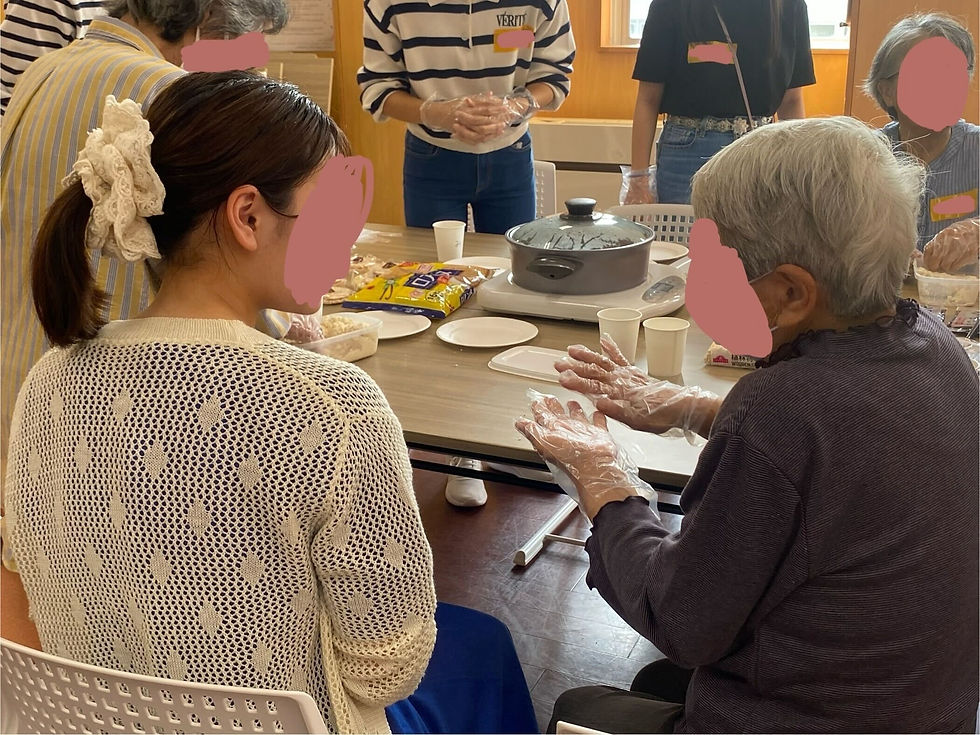
At these events, participants tour traditional houses, do light exercises, play icebreaker games, and enjoy simple meals together—creating a relaxed space for natural interaction.



Visiting Older Adults at Home
In addition to events, students conduct regular home visits about once a month.
“Each visit lasts around an hour,” explains Miho.
“We chat casually and ask participants to complete a simple health questionnaire. Many of the people we visit are in their 80s or 90s, so concerns like knee or back pain often come up.”
Mental well-being is also an important focus.
“Many of the people we’re currently connected with stay socially active and appear to be in good spirits,” says Saki.
“Still, by continuing these regular visits, we hope to consistently support both physical and mental health.”
Impact for Both Older Adults and Students
The Akita initiative is largely planned and run by students themselves. From designing flyers to organizing events and home visits, student members take the lead. Today, seven students are actively involved.
“At the beginning, some people were understandably cautious,” recalls Saki.
“They wondered why students were doing this. But by spending time together and listening, trust gradually grew. Now we see more smiles and hear wonderful stories from their lives. When we run into each other on the street, we stop and chat—it really feels like a relationship.”
For students, the learning goes both ways.
“While our main goal is to support older adults’ health, we also learn so much about Akita,” says Miho.
“We’ve received local foods, tried traditional activities like making rope from rice straw, and people now greet me when they see me around town. I truly feel this project benefits everyone involved.”
Looking Ahead: Expanding the Circle
“This year, we focused on strengthening activities and deepening relationships,” says Nin.
“Going forward, we want to expand this circle.”
While current participants are highly motivated, ASHA hopes to make it easier for more students to join casually. At the same time, the project faces the challenge of reaching older adults who may have greater health risks, without making participation feel forced.
“The key is creating natural, comfortable spaces where people of different generations genuinely feel, ‘I’m glad I came,’” Nin explains.
“That balance is what makes this work challenging—and meaningful.”

Join Us in Transforming Healthcare in Nepal
ASHA is a certified NPO working in Nepal with the long-term goal of building sustainable healthcare systems. If you share our vision for transforming the future of healthcare in Nepal, we warmly welcome your support.
We are also looking for pro bono members to join our efforts. We are especially seeking individuals with skills or experience in:
Project Management
Engineering
Fundraising
Legal Affairs
Accounting & Finance
However, even if your expertise does not fall into these areas, anyone who shares our mission is welcome to get involved. If you are interested, please feel free to contact us.


Comments